
Tips for Indiana Homeowners: How to Keep Your AC Running All Summer
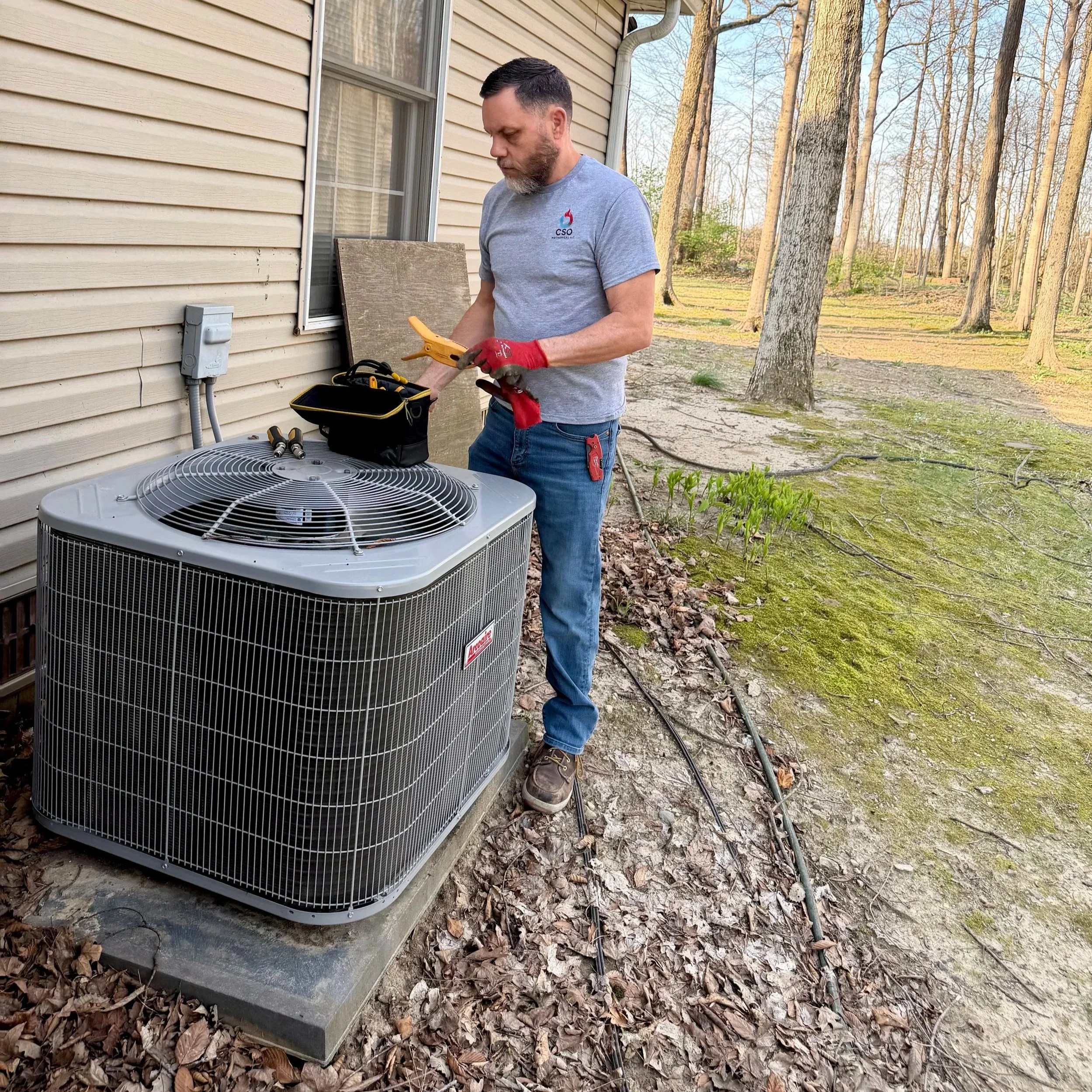
Indianapolis summers move fast. One week it is 65 degrees with the windows open, and the next your AC is running eight hours straight trying to keep up with 90-degree heat and full humidity. Your air conditioning system works harder in summer than any other season — and what you do (or do not do) right now has a direct impact on whether it holds up all the way through August.
Here are the most effective things Indianapolis homeowners can do to keep their AC running strong this summer.
Table of Contents
Change Your Air Filter Every Month
During summer, your AC runs far more frequently than any other season — which means your filter gets dirty faster. A clogged filter restricts airflow, forces the system to work harder, and can lead to frozen coils or a full system shutdown.
During peak cooling months (June through August), check your filter every 30 days and replace it when it looks gray or visibly dirty. If you have pets or anyone in your home has allergies, replace it even more frequently.
This is the single easiest thing a homeowner can do to protect their system — and one of the most commonly skipped.
2. Clear the Area Around Your Outdoor Unit
The outdoor condenser unit needs room to breathe. Over the spring, grass, weeds, mulch, and debris can creep in close — and during summer, lawn clippings and cottonwood buildup are a real problem in areas like Carmel, Fishers, and Noblesville.
Keep at least two feet of clearance on all sides of the unit. Gently rinse the exterior fins with a garden hose if you notice debris buildup — spray downward, not inward. Never use a pressure washer.
A restricted condenser runs hotter and works harder than it should, which shortens compressor life over time.
3. Keep the Condensate Drain Line Clear
Your AC removes humidity from the air as it cools your home, and that moisture drains out through a condensate line. In summer, that line sees a lot of water — and algae and mold can build up and cause a clog.
A clogged drain line causes water to back up, and most modern systems shut down automatically when that happens. You will come home to a warm house with no obvious reason why the AC is off.
Prevention is simple: pour a cup of plain white vinegar down the condensate drain access port every month during summer. This keeps buildup from forming.
4. Stop Closing Vents in Unused Rooms
This is one of the most common mistakes Indianapolis homeowners make — and it seems logical but actually backfires. Your HVAC system is sized and balanced for your whole home. Closing vents in unused rooms increases pressure throughout the duct system, which forces the system to work against itself.
The result: reduced efficiency, uneven cooling, and extra strain on the blower and compressor. Keep all vents open throughout the summer, even in rooms you rarely use.
5. Set Your Thermostat the Right Way
The temperature you set is your call — everyone's comfort level is different. What matters more than the number is consistency.
Avoid swinging the thermostat dramatically throughout the day. Dropping it 10 degrees when you get home does not cool the house faster — your AC delivers the same volume of cool air regardless of the setpoint. It just runs longer and harder to reach a lower target, which drives up your energy bill and adds unnecessary wear on the compressor.
Pick a comfortable temperature, set it, and let the system do its job steadily. If you leave for work, raising it by 4-5 degrees while you are gone is a reasonable way to save energy without stressing the system when it kicks back on.
A programmable or smart thermostat that gradually ramps down before you arrive home is the best setup — the system works at a steady pace rather than sprinting to catch up.
6. Watch for Ice on the Refrigerant Lines
If you see ice forming on the copper refrigerant lines near your indoor air handler or on the outdoor unit, shut the system off immediately and call a technician.
Ice on the lines is a sign of one of two things: low refrigerant (usually a leak) or severely restricted airflow (usually a clogged filter or blocked return vent). Running a system with ice on the lines risks permanent compressor damage — a repair that costs significantly more than the underlying problem.
7. Block Heat Before It Gets Inside
Your AC works less when your home stays cooler to begin with. A few simple steps cut your system's workload significantly on hot Indianapolis afternoons:
Close blinds and curtains on south and west-facing windows during peak afternoon heat (1–5pm)
Use ceiling fans to help circulate cooled air — but remember fans cool people, not rooms, so turn them off when you leave
Avoid running the oven or dryer during the hottest part of the day
Make sure attic insulation is adequate — a poorly insulated attic dumps heat directly into your living space
8. Do Not Crank the Thermostat Way Down
When you walk into a hot house, the urge is to set the thermostat as low as it goes. But your AC system delivers the same volume of cool air regardless of the setpoint — it just runs longer to reach a lower temperature.
Setting it to 65 instead of 78 does not cool the house faster. It just keeps the system running for much longer than needed, driving up your electric bill and adding wear to the compressor.
Set it to your target temperature and let it run.
9. Listen to Your System
Your AC will usually tell you something is wrong before it fails completely — if you pay attention. During summer, pay attention to:
New noises: banging, rattling, squealing, or hissing that was not there before
Weak airflow: vents that used to push strong air now feel sluggish
Warm spots: rooms that used to cool fine are now staying warm
Longer cycles: the system running almost constantly without reaching the set temperature
Odors: musty smells from vents can indicate mold in the ductwork or on the coil
Any of these is worth a call to a technician. Catching a problem in May or June is much less disruptive than catching it during a July heat wave.
10. Schedule a Professional Tune-Up If You Have Not Already
If your AC has not been professionally serviced this year, now is the time — before summer schedules fill up. A tune-up catches small issues before they become mid-summer breakdowns, verifies refrigerant levels, cleans the coil, and confirms the system is running at peak efficiency going into the hottest months.
That means an honest assessment of your system — not an upsell. If your system is in good shape, we will tell you that too.
Keep Your Indianapolis Home Cool All Summer
CSO Mechanical LLC serves homeowners and businesses across Indianapolis, Carmel, Fishers, Noblesville, Greenwood, Westfield, Zionsville, Avon, and Plainfield. Licensed, bonded, insured — and ready for summer.
If your AC needs a tune-up, a repair, or you just want someone to take a look before the heat hits, call (317) 372-1608 or visit our contact page to schedule service.