
What Happens If You Don't Change Your Air Filter?
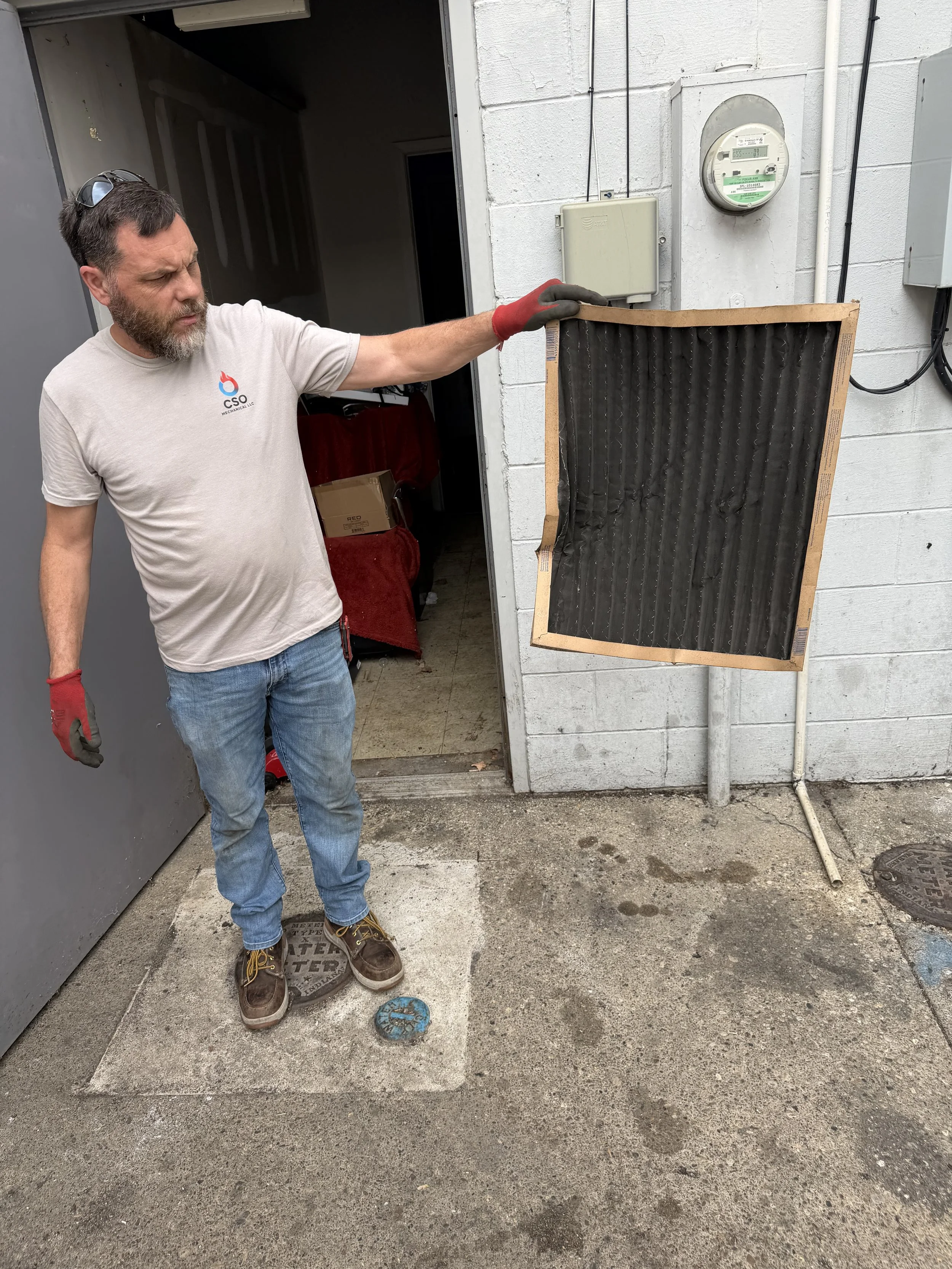
It is easy to forget. The filter is tucked away behind a vent or inside your furnace, out of sight and out of mind. Life gets busy. Months go by. The system still runs, so everything seems fine.
But a clogged air filter does not cause one problem — it causes a chain reaction. Each issue it creates feeds into the next, and by the time you notice something is wrong, the repair bill is far bigger than a $15 filter would have been.
Here is exactly what happens when you let your air filter go too long without changing it.
Table of Contents
Your Energy Bills Go Up
This is the first thing most Indianapolis homeowners notice — and they usually blame it on the weather, not the filter.
When a filter gets clogged, your HVAC system has to work harder to pull air through it. The blower motor runs longer and at higher capacity just to move the same amount of air. According to the U.S. Department of Energy, a dirty filter can raise your energy consumption by up to 15%.
On a $150 monthly energy bill, that is an extra $270 per year — just from one filter you forgot to change. Over two or three summers, that adds up fast.
Your System Runs Longer Without Actually Cooling
A clogged filter chokes airflow. Less air passes over the evaporator coil, which means less heat gets removed from your home per cycle. The system runs and runs but never quite reaches the temperature you set.
You feel it as warm spots, rooms that never cool down, or an AC that seems to run all day without giving you relief. In Indianapolis summers, where temperatures regularly push into the 90s, this is a miserable situation — and it is entirely preventable.
Your Evaporator Coil Freezes
This is where a dirty filter stops being an inconvenience and starts becoming a real repair.
The evaporator coil inside your air handler needs a steady flow of warm air moving across it to function correctly. When airflow is restricted, the coil gets too cold and the moisture on its surface freezes. Ice builds up. Eventually the coil is encased in ice and no air passes through at all — your AC runs continuously but produces no cooling whatsoever.
Thawing a frozen coil takes time. If the underlying cause is not fixed, it refreezes. Left long enough, ice buildup can damage the coil itself, turning a free fix into a costly repair.
Sound familiar? This is exactly the kind of problem we pull out of commercial walk-in units too — just on a larger scale.
Your Compressor Takes the Hit
The compressor is the most expensive component in your AC system. Replacing it typically runs $1,500 to $2,500 for a residential unit — and in many cases, a compressor failure means replacing the whole system.
A clogged filter contributes to compressor damage in two ways. First, short cycling — the system turning on and off rapidly because it cannot maintain proper pressure — puts enormous strain on the compressor. Second, if the evaporator coil freezes and the system keeps running, liquid refrigerant can travel back to the compressor, causing what technicians call "liquid slugging" — a mechanical failure that destroys the compressor from the inside.
The compressor does not fail overnight. It fails after months of operating under conditions a dirty filter created.
Your Furnace Can Overheat
In winter, a clogged filter is just as damaging. When your furnace cannot draw enough air across the heat exchanger, the heat exchanger overheats. Most modern furnaces have a high-limit safety switch that shuts the system down when this happens — which is why some homeowners find their furnace inexplicably shutting off on cold nights.
Repeated overheating cycles crack heat exchangers over time. A cracked heat exchanger is not just an HVAC problem — it is a carbon monoxide risk. This is a safety issue, not just a comfort one.
Your Indoor Air Quality Drops
The air filter does two jobs: it protects the HVAC system and it cleans the air your family breathes. A clogged filter fails at both.
Once the filter is full, particles that would normally be trapped — dust, pollen, pet dander, mold spores — pass right through and recirculate through your home. For Indianapolis households with allergy sufferers or asthma, this is especially noticeable. If your allergies seem worse indoors in summer, a dirty filter is one of the first things to check.
Your System's Lifespan Shortens
An HVAC system that runs constantly under restricted airflow wears out faster than one that runs efficiently. Every component — the blower motor, the capacitor, the contactor, the compressor — accumulates hours of stress that a clean filter would have prevented.
A well-maintained system in Indianapolis can last 15 to 20 years. A neglected one may need replacement in 10. The cost difference between those two outcomes is significant — and a $15 filter changed on schedule is one of the simplest ways to stay on the right side of that gap.
How Often Should You Change Your Filter?
There is no universal answer, but here are reliable guidelines for Indianapolis homeowners:
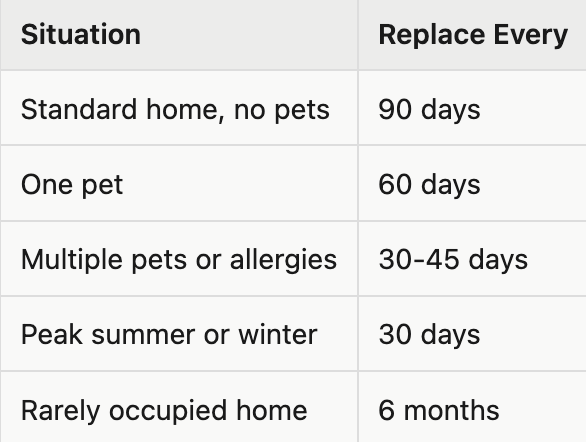
During the hottest months — June, July, and August — when your AC runs nearly continuously, check the filter every 30 days regardless of your usual schedule.
How to Tell If Your Filter Needs Changing
Pull the filter out and hold it up to a light. A new filter lets light through easily. A filter that needs changing looks gray, dark, or visibly clogged with dust and debris. If you cannot see light through it at all, it should have been changed weeks ago.
Also watch for these signs:
Visible dust buildup on supply vents around the home
Weak airflow from vents that used to push strongly
More dust than usual settling on furniture
System running longer cycles than normal
A filter change takes two minutes and costs under $20. The repairs it prevents can cost thousands.
Need Help With Your HVAC System in Indianapolis?
If your system has been running on a dirty filter and is not performing the way it should, CSO Mechanical LLC can help. We serve Indianapolis, Carmel, Fishers, Noblesville, Greenwood, Westfield, Zionsville, Avon, and Plainfield. Licensed, bonded, and insured — 30+ years of hands-on HVAC/R experience.
Call (317) 372-1608 or visit our contact page to schedule service.