
How Long Does an AC Unit Last? Signs It's Time for a Replacement
It's the middle of an Indianapolis summer, temps pushing 90°F, and your AC is struggling to keep up. Before you call for another repair, ask the bigger question: is this system worth fixing, or is it time to move on?
Knowing how long an AC unit typically lasts and recognizing when it's past its prime can save you from pouring money into a system that's on its way out.
Table of Contents
How Long Does a Central AC Unit Last
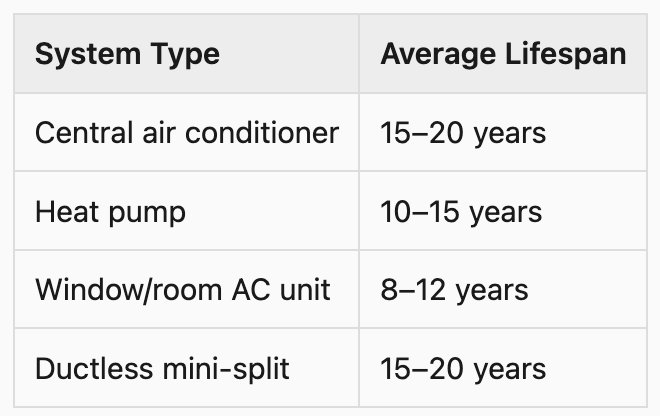
Most central air conditioners last 15 to 20 years with proper maintenance. Some units push past 20 years; others start showing serious wear around 10–12, depending on how hard they've worked and how well they've been maintained.
What Affects AC Lifespan?
Installation quality is the biggest variable. A system installed incorrectly. It could be the wrong size, improper refrigerant charge, or poor duct connections. All of these will fail faster regardless of brand. That's one reason working with a licensed, experienced contractor matters from day one.
Maintenance frequency is close behind. Annual tune-ups, regular filter changes, and a clean outdoor unit can add years to your system's life. A neglected AC works harder, wears faster, and breaks more often.
Climate and usage matter too. In Indiana, your AC runs hard from May through September. That heavy seasonal demand ages systems faster than in milder climates.
Equipment quality plays a long-term role. Higher-efficiency units from established brands typically outlast budget systems, the upfront cost difference often pays off over 15–20 years.
7 Signs Your AC Unit Needs to Be Replaced
An aging system doesn't always fail suddenly. More often, it sends warning signs for months before it quits completely. Here's what to watch for:
1. It's 15 years old or older
Age is the most reliable indicator. If your unit is 15+ years old, it's operating on borrowed time even if it's still running. Efficiency has likely declined significantly compared to a modern system.
2. Repair costs are piling up
A useful rule of thumb: if the repair cost × the unit's age exceeds $5,000, replacement is usually the smarter financial move. For example, a $400 repair on a 15-year-old system ($400 × 15 = $6,000) tips toward replacement.
3. Your energy bills keep climbing
Older systems lose efficiency as components wear. If your cooling costs have crept up over the past few seasons without a change in usage, your system is working harder for less output. A new high-efficiency unit can cut cooling costs by 20–40%.
4. The system uses R-22 refrigerant
R-22 (Freon) was phased out in the U.S. as of January 2020. If your system uses R-22, recharging it is extremely expensive sometimes $100 per pound or more and the refrigerant supply is dwindling. That alone can make replacement the better option.
5. Cooling is uneven or inconsistent
Some rooms freezing while others stay warm, or the house never quite reaching the set temperature, can signal a failing compressor, failing ductwork, or a system that's simply too old to distribute air effectively.
6. Unusual sounds or smells
Grinding, banging, squealing, or musty odors coming from your system are never a good sign. Some can be repaired; others indicate major component failure.
7. Humidity feels worse than usual
A properly functioning AC removes humidity as it cools. If your home feels muggy even when the system is running, it may no longer be pulling moisture out of the air effectively, a sign of declining performance.
Repair vs. Replace: How to Decide
If your system is under 10 years old and has been well-maintained, a repair is usually the right call, especially for minor issues like a capacitor, contactor, or refrigerant recharge.
If your system is over 12–15 years old, the calculus shifts. Each repair buys a little more time, but the underlying components are all aging together. One fix often leads to another within a season or two.
A good HVAC technician will be honest with you about where your system stands and whether the money is better spent on a repair or put toward a new, more efficient unit.
What to Expect When You Replace Your AC
A new complete central AC installation (with furnace included) in Indianapolis typically costs between $10,000 - $15,000+, depending on the size of your home, the efficiency rating (SEER2) of the unit, and whether any ductwork work is needed.
Modern high-efficiency units (16+ SEER2) cool more effectively, run quieter, and cost significantly less to operate month-to-month than systems installed 15 years ago. Most new units also come with 10-year manufacturer warranties on parts.
Keep Your Current System Running Longer
If your system isn't at replacement age yet, the best investment you can make is consistent maintenance:
Change your air filter every 1–3 months
Schedule a professional tune-up every spring before cooling season
Keep the outdoor unit clear of debris, grass, and shrubs
Don't close vents in unused rooms it creates pressure imbalances that stress the system
Use a programmable or smart thermostat to reduce runtime during hours you don't need it
Ready for a Second Opinion on Your AC?
If your system is showing any of the signs above or you just want to know where it stands, CSO Mechanical LLC is here to help. Chris O'Hern and the CSO team have 30+ years of experience diagnosing and replacing HVAC systems across Indianapolis, Carmel, Fishers, Noblesville, Mooresville, Greenwood, and the surrounding areas.
We'll give you a straight answer about whether your system needs a repair, a tune-up, or a replacement with no pressure and no runaround.
Call (317) 372-1608 or visit our contact page to schedule service.