
How to Lower Your Energy Bill With HVAC This Summer
Indiana summers are no joke. When temperatures hold in the upper 80s and 90s for weeks at a time, your HVAC system works overtime — and your energy bill reflects it. The average U.S. household spends about $265 per month on electricity in summer, with cooling making up nearly half of that.
The good news: most homeowners can cut cooling costs meaningfully without replacing their system or spending a lot of money. Here's how.
1. Set Your Thermostat Strategically
The single most impactful change you can make is adjusting how you use your thermostat.
The Energy Star recommendation: Set your thermostat to 78°F when you're home, 85°F when you're away, and 82°F when you're sleeping. Every degree you raise the thermostat saves roughly 1–3% on your cooling bill.
Many homeowners keep their homes at 70–72°F all day — even when no one is home. That habit can add $50–$80 per month to your summer bill compared to the 78°F baseline.
2. Upgrade to a Smart or Programmable Thermostat
A smart thermostat automates the strategy above. You set your schedule once, and it handles the rest — raising the temp when you leave and cooling back down before you get home.
Smart thermostats like the Google Nest or Ecobee average $150–$250 installed and typically save 10–15% on heating and cooling costs annually. Many Indiana utility companies offer rebates on smart thermostat purchases — check with AES Indiana or Duke Energy Indiana to see what's available.
3. Change Your Air Filter
A clogged air filter makes your system work harder for the same output. An AC running against a dirty filter uses more electricity and cools less effectively.
Change your filter every 1–3 months during summer. A clean filter is the cheapest, easiest maintenance task you can do — and it directly impacts energy efficiency.
4. Seal Air Leaks Around Windows and Doors
If cool air is leaking out through gaps around windows, doors, or where pipes and wires enter your home, your AC works harder to maintain temperature.
DIY fixes: Weatherstripping and caulk are inexpensive and widely available at any hardware store. Focus on:
Window and door frames (check for daylight or feel for drafts)
Attic hatches
Electrical outlets on exterior walls
Where pipes/wires enter through walls
Sealing air leaks can reduce cooling costs by 5–15%, according to the U.S. Department of Energy.
5. Use Ceiling Fans
Ceiling fans don't lower the temperature — but they make rooms feel 4°F cooler by creating a wind chill effect. That means you can set the thermostat 4°F higher and feel just as comfortable.
Make sure your fans run counterclockwise in summer (looking up at the blades) to push air straight down. Reverse in winter to circulate warm air.
One important rule: Turn fans off when you leave the room. Fans cool people, not rooms — running them in an empty room wastes electricity.
6. Block Heat from Windows
Up to 30% of unwanted heat enters homes through windows, according to the Department of Energy. South- and west-facing windows are the biggest culprits in the afternoon.
What works:
Blackout curtains or thermal blinds (close them before you leave for the day)
Exterior shades or awnings
Window film that blocks UV and infrared heat
This is especially effective in older Indianapolis homes with single-pane windows.
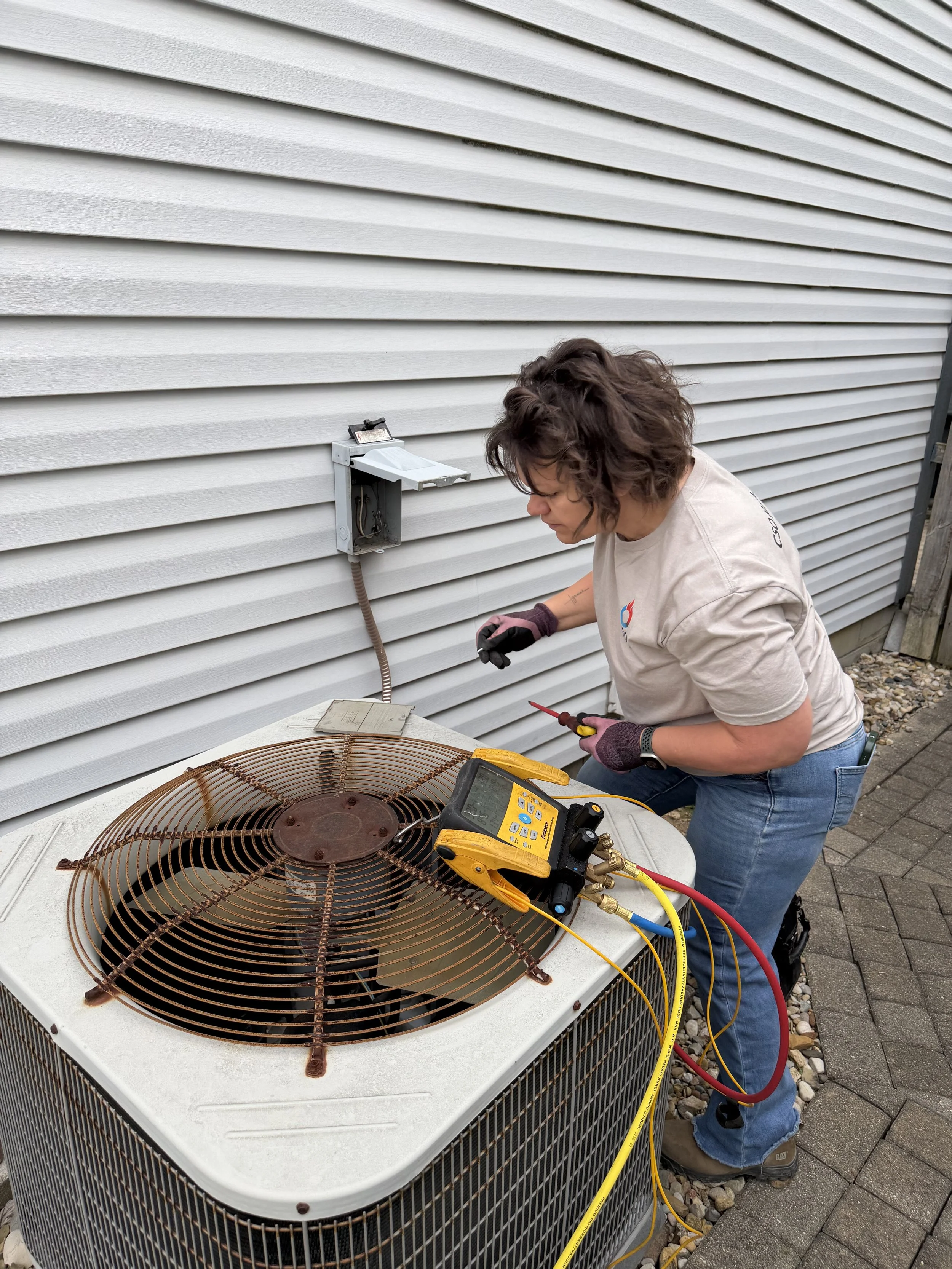
7. Get a Professional Tune-Up
A well-maintained AC runs 15–20% more efficiently than a neglected one. During a professional tune-up, a technician will:
Clean the evaporator and condenser coils
Check and adjust refrigerant levels
Inspect and lubricate moving parts
Test electrical connections and controls
Measure airflow and system performance
If you haven't had a tune-up this year, it's not too late — and it can pay for itself in energy savings alone within a few months.
8. Reduce Heat Generation Inside Your Home
Your AC works against any heat you generate indoors. Small changes add up:
Run the oven, dishwasher, and dryer in the early morning or evening (not peak afternoon heat)
Switch to LED lighting (incandescent bulbs generate significant heat)
Use bathroom exhaust fans while showering to remove heat and humidity
Grill outside instead of cooking indoors when possible
Want to make sure your system is running as efficiently as possible this summer? CSO Mechanical offers tune-ups for Indianapolis homeowners and businesses across the metro. Chris O'Hern's team gives your system a thorough check — and tells you exactly where efficiency can be gained.
📞 Call (317) 372-1608 or request service at contact us.